
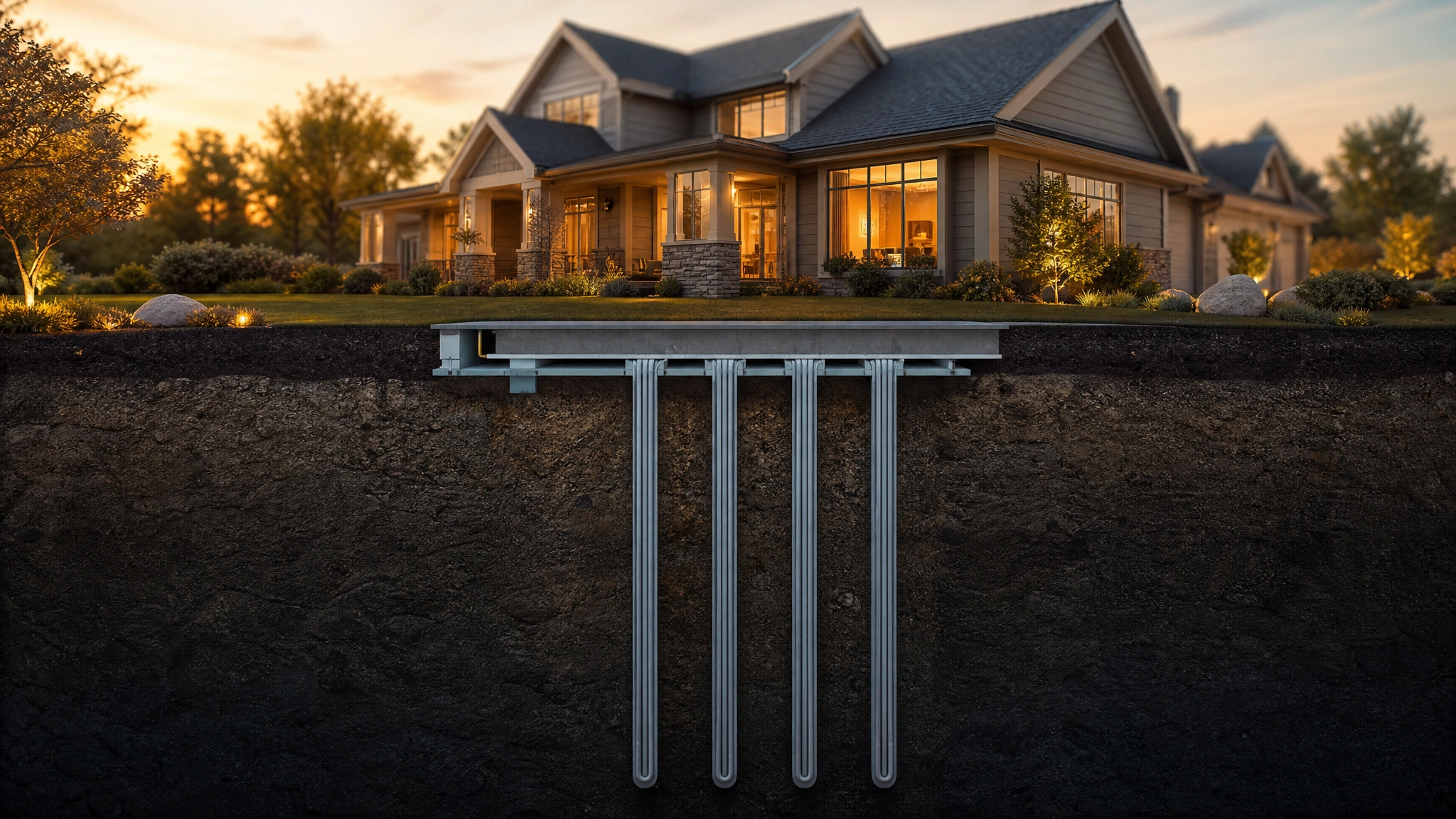
Geothermal Energy Tax Credits & Rebates by State: 2026 Complete Guide
Introduction: The Best Time to Go Geothermal Is Now
Right now, the financial landscape for geothermal energy is looking fantastic! Thanks to the federal government's 30% Investment Tax Credit (ITC) under the Inflation Reduction Act, along with a wide range of state tax credits, utility rebates, property tax exemptions, and low-interest financing options, homeowners and businesses can cut their geothermal installation costs by an incredible 40–60% in 2026. Isn’t that amazing?
This guide has got you covered with everything you need to know about the major incentives available for geothermal heat pump installations in 2026. We’ll walk you through the federal ITC, state programs from over 15 states, utility rebates, and practical tips on how to claim each incentive to maximize your savings. Whether you're thinking about a new installation or you've just finished one, this guide will help you snag every dollar of available incentive.
If you want a broader overview of the incentives out there, check out our complete geothermal tax credits and incentives guide for 2025–2026. And for some context on installation costs, take a look at our geothermal cost guide.
The Federal 30% Investment Tax Credit (ITC)
One of the biggest incentives for geothermal systems in 2026 is the federal Investment Tax Credit (ITC). This was set up under Section 25D of the Internal Revenue Code and got a big boost from the Inflation Reduction Act of 2022. It’s a game-changer for homeowners looking to go geothermal!
What the Federal ITC Covers
So, what exactly does the federal ITC cover? You’ll get a 30% tax credit on the total cost of installing a qualified geothermal heat pump system. Here’s what’s included:
- Heat pump equipment, like the indoor unit and controls
- Ground loop installation, which covers drilling, trenching, pipes, and fittings
- Labor costs for getting everything installed
- Any necessary electrical upgrades for the system
- Ductwork modifications that are directly related to the geothermal setup
This credit is a dollar-for-dollar reduction in your federal income tax liability—not just a deduction! For example, if your total installation cost is $25,000, you’ll enjoy a $7,500 credit against your federal taxes. How great is that?
Key Rules and Limitations
- Primary residence requirement: You’ll need to install the system in your primary or secondary home—rental properties don’t qualify for this residential credit.
- No cap: Unlike some earlier versions, the current 30% ITC has no dollar cap for residential installations, making it even more appealing!
- Carryforward: If your credit exceeds your tax liability for the year you install, you can carry the excess forward to future tax years. That’s handy!
- Qualified equipment: Your heat pump must meet Energy Star requirements, but don’t worry—most modern geothermal heat pumps do!
- Duration: Enjoy the 30% rate through 2032, but be aware it steps down to 26% in 2033 and 22% in 2034.
- Commercial installations: If you’re looking at commercial geothermal installations, they qualify for the commercial ITC (also at 30%) under Section 48, plus you get benefits from accelerated depreciation (MACRS).
How to Claim the Federal ITC
To claim the federal ITC, just fill out IRS Form 5695 (Residential Energy Credits) when you file your federal income tax return for the year your system is up and running. Make sure to keep all your receipts, contracts, and any documentation of your installation costs. Your geothermal contractor should give you an itemized invoice that clearly breaks down equipment and installation costs, making it easier for you.
State-by-State Geothermal Incentives Guide (2026)
New York
If you’re in New York, you’re in luck! The state has one of the most generous incentive packages for geothermal systems in the entire country:
- NY State Tax Credit: You can get back 25% of your installation cost, up to $5,000 per system. Just claim it on Form IT-255.
- NY-Sun/Clean Heat Program: NYSERDA offers rebates of up to $7,000 for residential ground source heat pump installations when you go through participating contractors.
- Property Tax Exemption: For 15 years, New York won’t assess the added value of your geothermal system in property taxes.
- Sales Tax Exemption: You won’t have to pay state or local sales tax on geothermal heat pump equipment. How great is that?
Combined savings example: Imagine you install a $30,000 system: You could see up to $21,000 in incentives – that’s the Federal ITC ($9,000), the State tax credit ($5,000), and the NYSERDA rebate ($7,000) – bringing your net cost down to just $9,000!
Massachusetts
- Mass Save Rebates: In Massachusetts, you can receive up to $10,000 for ground source heat pump installations through the Mass Save program, available via participating utilities like Eversource, National Grid, and Unitil.
- Renewable Thermal Credits (RTCs): Homeowners with geothermal systems can earn RTCs under the Alternative Energy Portfolio Standard, creating ongoing revenue of $20–$50 per year. That's like getting paid to go green!
- Property Tax Exemption: Massachusetts gives you a break by exempting geothermal systems from property tax increases for 20 years.
- Sales Tax Exemption: You won't have to worry about sales tax on geothermal equipment in Massachusetts either.
Combined savings example: For a $28,000 installation, you could grab a Federal ITC of $8,400 plus a Mass Save rebate of $10,000, totaling $18,400 in incentives and dropping your net cost down to $9,600.
Minnesota
- Xcel Energy Rebates: If you’re an Xcel Energy customer, you can snag up to $1,500 for residential geothermal installations.
- CenterPoint Energy Rebates: Switching from natural gas to geothermal? CenterPoint offers up to $1,000 in rebates.
- Sales Tax Exemption: Minnesota has you covered, exempting geothermal heat pump equipment from state sales tax.
- Property Tax Exemption: You won’t see property tax increases for having a geothermal system in Minnesota either.
Wisconsin
- Focus on Energy Rebates: Wisconsin’s energy efficiency program provides rebates between $500 and $2,000 for residential geothermal installations, depending on the system's size and efficiency.
- We Energies/WPS Rebates: If you’re a customer of participating utilities, you can get additional rebates ranging from $300 to $800.
- Sales Tax Exemption: Wisconsin exempts geothermal equipment from the 5% state sales tax. Just another way to save!
Maryland
- Maryland Energy Administration Grant: You could receive up to $3,000 for residential geothermal heat pump installations.
- BGE Smart Energy Savers Program: BGE customers can take advantage of rebates up to $1,500 for geothermal installations.
- Pepco/Delmarva Rebates: Other Maryland utilities also offer similar rebate programs.
- Property Tax Credit: Some Maryland counties may provide property tax credits for geothermal installations.
Virginia
- Dominion Energy Rebates: If you’re in Virginia, Dominion Energy offers rebates of up to $2,000 for residential geothermal installations.
- Appalachian Power Rebates: In western Virginia, you could get up to $1,500 in rebates.
- Sales Tax Exemption: Virginia also exempts geothermal heat pump equipment from state sales tax.
- Property Tax Exemption: Localities in Virginia may exempt geothermal systems from property tax increases.
Colorado
- Xcel Energy Colorado Rebates: Xcel Energy customers can get up to $1,500 for residential geothermal installations.
- Black Hills Energy Rebates: If you're in southern Colorado, there's a potential rebate of up to $1,000.
- Property Tax Exemption: Colorado also exempts renewable energy systems, including geothermal, from property tax increases.
- Sales Tax Exemption: You won’t have to pay state sales tax on geothermal equipment in Colorado either!
Oregon
- Oregon Residential Energy Tax Credit (RETC): You can receive up to $1,500 for geothermal heat pump installations. Just claim it on Oregon Form OR-RETC.
- Energy Trust of Oregon Incentives: Depending on your utility provider, cash incentives can range from $1,000 to $3,000 for customers of Pacific Power and Portland General Electric.
- Property Tax Exemption: Oregon exempts geothermal systems from property tax increases for 10 years.
Michigan
- Consumers Energy Rebates: You could get up to $1,500 for residential geothermal installations if you're with Consumers Energy.
- DTE Energy Rebates: DTE Energy customers can benefit from rebates of up to $1,000.
- Property Tax Exemption: Michigan exempts geothermal systems from property tax increases as well.
Pennsylvania
- PECO Smart Ideas Rebates: Up to $1,000 in rebates is available for residential geothermal installations for PECO customers.
- PPL Electric Utilities Rebates: PPL customers can benefit from similar rebate programs.
- Sales Tax Exemption: Pennsylvania also exempts geothermal equipment from state sales tax.
Illinois
- ComEd Energy Efficiency Rebates: You can receive up to $1,000 for residential geothermal installations if you’re with ComEd.
- Ameren Illinois Rebates: Ameren customers have similar rebate options available.
- Sales Tax Exemption: Illinois also offers a sales tax exemption for geothermal equipment.
Maine
- Efficiency Maine Rebates: You could receive up to $8,000 for ground source heat pump installations, as Maine boasts one of the most aggressive heat pump incentive programs in the country.
- Property Tax Exemption: Maine exempts geothermal systems from property tax increases.
Connecticut
- Connecticut Green Bank Financing: Get low-interest loans (even as low as 0%) for geothermal installations through the Smart-E Loan program.
- Eversource/UI Rebates: You can receive up to $1,500 for residential geothermal installations.
- Property Tax Exemption: Connecticut provides a 15-year exemption for geothermal systems from property tax increases.
Vermont
- Efficiency Vermont Rebates: You can get up to $3,000 for ground source heat pump installations.
- Property Tax Exemption: Vermont exempts geothermal systems from property tax increases.
Iowa
- MidAmerican Energy Rebates: Up to $1,000 is available for residential geothermal installations for MidAmerican Energy customers.
- Iowa Utilities Board Programs: Various utility programs offer additional incentives for geothermal systems.
- Property Tax Exemption: Iowa exempts geothermal systems from property tax increases as well.
State Incentive Comparison Table
| State | State Tax Credit | Max Utility Rebate | Property Tax Exemption | Sales Tax Exemption | Total Max State Incentive |
|---|---|---|---|---|---|
| New York | 25% (max $5,000) | $7,000 | Yes (15 years) | Yes | $12,000+ |
| Massachusetts | None | $10,000 | Yes (20 years) | Yes | $10,000+ |
| Maine | None | $8,000 | Yes | No | $8,000 |
| Maryland | None | $3,000 grant + $1,500 | Varies by county | No | $4,500 |
| Vermont | None | $3,000 | Yes | No | $3,000 |
| Oregon | $1,500 | $3,000 | Yes (10 years) | No | $4,500 |
| Virginia | None | $2,000 | Varies by locality | Yes | $2,000+ |
| Wisconsin | None | $2,800 | No | Yes | $2,800 |
| Colorado | None | $1,500 | Yes | Yes | $1,500+ |
| Michigan | None | $1,500 | Yes | No | $1,500 |
| Minnesota | None | $1,500 | Yes | Yes | $1,500+ |
| Pennsylvania | None | $1,000 | No | Yes | $1,000+ |
| Illinois | None | $1,000 | No | Yes | $1,000+ |
| Connecticut | None | $1,500 | Yes (15 years) | No | $1,500+ |
| Iowa | None | $1,000 | Yes | No | $1,000 |
Utility Rebate Programs: How to Find and Apply
If you’re a homeowner, utility rebate programs can be a fantastic way to save some cash, but keep in mind they can differ quite a bit depending on your utility company and might change each year. So, how do you find and apply for those rebates in your area? Let’s break it down:
- Check your utility's website: Most utility companies have their current rebate programs listed on their website, usually under sections like "Energy Efficiency" or "Rebates." It’s worth a quick look!
- Use the DSIRE database: The Database of State Incentives for Renewables & Efficiency (dsireusa.org) is a great resource. It keeps a thorough, up-to-date list of all state and utility incentive programs.
- Ask your contractor: If you’re working with a geothermal contractor, they’re usually pretty well-versed in local utility programs. They can help you pinpoint and apply for any available rebates.
- Apply before installation: A lot of utility rebate programs need you to get pre-approval before you start your installation. So, be sure to read through the program requirements closely.
- Keep documentation: When you apply for utility rebates, you'll typically need to submit equipment specs, contractor invoices, and proof of installation. Keeping good records will make this part much easier!
Maximizing Your Total Incentive Package
Want to get the most out of your geothermal incentives? It’s all about stacking different programs together. Here’s a simple strategy to help you capture those savings:
Step 1: Claim the Federal 30% ITC
This benefit is available to all homeowners, no matter where you live. Just file IRS Form 5695 with your federal tax return for the year you install your system. And if you can’t use the full credit right away, don’t worry—you can carry it forward to future years!
Step 2: Apply for State Tax Credits
Check if your state offers a geothermal tax credit (New York, Oregon, and a few others do). When you’re filing your state income tax return, make sure to apply for these credits. They stack right on top of the federal ITC, giving you even more savings!
Step 3: Apply for Utility Rebates
Don’t forget to apply for utility rebates either before or right after your installation. Just a heads up—utility rebates might lower the amount you can claim for the federal ITC, so it’s a good idea to talk to a tax professional about how these things interact.
Step 4: Verify Property Tax Exemption
If your state or local area has a property tax exemption for geothermal systems, be sure to file the necessary paperwork with your local assessor’s office after your installation. This way, your property tax won’t go up just because you’ve added the value of a geothermal system!
Step 5: Explore Financing Programs
Looking for ways to make the remaining costs more manageable? Low-interest financing options like PACE, Green Bank loans, or utility on-bill financing can really help. For instance, Connecticut’s Smart-E Loan program offers 0% financing for qualified homeowners. It’s worth checking out!
Commercial Geothermal Incentives
If you’re considering commercial geothermal installations, you’ll be happy to know that there are some pretty attractive incentives available, often even better than those for residential systems!
Commercial Investment Tax Credit (Section 48)
When it comes to commercial geothermal heat pump installations, you can take advantage of the federal ITC under Section 48 of the Internal Revenue Code, which offers a solid 30% off the total installed cost. The great thing about the commercial ITC is that there’s no cap on the credit, and it can be applied against your corporate income tax liability. Plus, if you don’t use all your credits right away, you can carry them back one year or forward for up to 20 years.
Bonus Depreciation and MACRS
Your commercial geothermal systems can also benefit from accelerated depreciation through the Modified Accelerated Cost Recovery System (MACRS), with a quick 5-year recovery period. Along with the bonus depreciation provisions (currently at 60% in 2026, decreasing each year), you can deduct a large chunk of your system's cost in the first year. This combination of accelerated depreciation and the 30% ITC can really lower the effective net cost of a commercial geothermal system to about 30–40% of what you initially pay.
Prevailing Wage and Apprenticeship Bonuses
Thanks to the Inflation Reduction Act, if your commercial geothermal project meets certain prevailing wage and apprenticeship requirements, you could qualify for an enhanced ITC that goes up to 50%! That’s the base 30% plus a 10% domestic content bonus and potentially more. Keep in mind that these requirements typically apply to larger projects over 1 MW, which usually means you’re looking at significant commercial or institutional installations.
State Commercial Incentives
Don’t forget, many states have their own additional incentives just for commercial geothermal projects!
- New York: The NY Green Bank provides low-interest financing for commercial clean energy projects, including geothermal.
- Massachusetts: You can find support for commercial geothermal installations through the Commercial PACE program and Mass Save commercial rebates.
- Connecticut: The Connecticut Green Bank's C-PACE program offers long-term financing for commercial geothermal at competitive rates.
- California: The California Energy Commission has grants and loans available for commercial clean energy projects.
- Colorado: The Colorado Energy Office is here to help with technical assistance and financing support for commercial geothermal projects.
Low-Income and Affordable Housing Incentives
Thanks to the Inflation Reduction Act, there are some great new perks for geothermal installations in low-income communities and affordable housing:
- Low-Income Communities Bonus: If you're working on projects in designated low-income neighborhoods, you could snag an extra 10–20% ITC adder, which bumps your total credit up to 40–50%!
- Affordable Housing Bonus: Geothermal systems in affordable housing developments might qualify for even better credits through the Low-Income Housing Tax Credit (LIHTC) program.
- Tribal Land Bonus: Projects taking place on tribal lands can also get an additional 10% ITC adder.
These boosted incentives really help make geothermal options more available for affordable housing developers and community groups looking to cut energy costs for residents in need.
Common Questions About Geothermal Incentives
Can I claim the federal ITC if I finance my geothermal installation?
Absolutely! You can take advantage of the federal ITC based on the total installed cost, no matter how you decide to finance it. Whether you’re paying cash, tapping into a home equity loan, or going for a specialized green energy loan, you can still claim that full 30% credit.
Do utility rebates reduce my federal ITC?
This one's a bit tricky. Utility rebates that fall under "subsidies" according to IRS rules might lower the amount you can use for the federal ITC. But don't worry—rebates from state programs (not from utilities) typically won’t affect your ITC basis. It’s a good idea to chat with a tax professional to get advice tailored to your situation.
Can I claim incentives for a geothermal system in a rental property?
The residential federal ITC (Section 25D) is specifically for primary and secondary residences. That said, if you’re looking at commercial geothermal installations in rental properties, those might qualify for the commercial ITC (Section 48). Again, consulting a tax pro is wise for guidance on this.
What documentation do I need to claim geothermal incentives?
Make sure to keep all of these important documents: contractor invoices (make sure they’re itemized), equipment specs, Energy Star certification, permit documents, and any utility rebate approval letters. Your contractor should give you a detailed invoice that clearly outlines all the eligible costs.
Tracking Incentive Changes and Staying Current
You know, geothermal incentive programs can change pretty quickly. State programs get funded every year, and they might run out of money mid-year. Utility rebates usually update with each budget cycle, and federal policies can shift with new legislation. So, how can you keep up with all this?
- DSIRE database (dsireusa.org): This is your go-to resource! It’s the most comprehensive and regularly updated database for state and utility incentive programs. Just search by your state and the technology you’re interested in.
- Your utility's website: Don’t forget to check your utility’s energy efficiency or rebate page directly. Sometimes DSIRE doesn’t have the latest info, so it’s good to verify.
- Your geothermal contractor: An experienced contractor will stay on top of local incentive programs as part of their job. Make sure to ask them about all the incentives you might be eligible for before you sign any contracts.
- IRS publications: If you’re looking for guidance on federal tax credits, take a look at IRS Publication 946 and the instructions for Form 5695. They update these every year.
- Energy.gov: The U.S. Department of Energy has a lot of helpful resources about federal clean energy incentives over at energy.gov.
Incentives for New Construction vs. Retrofit
You’ll find that the incentive landscape changes a bit when you’re looking at new construction compared to retrofit installations:
New Construction
If you’re working on new construction geothermal installations, you’ll be happy to know they qualify for all the same incentives as retrofit installations. Plus, there are some added perks for new builds:
- Energy Efficient New Home Credit (Section 45L): Builders of new homes that hit certain energy efficiency standards could snag a tax credit ranging from $2,500 to $5,000 per home. And guess what? Geothermal systems play a big role in hitting those standards.
- Lower installation costs: Installing the ground loop while prepping the site (before landscaping goes in) usually costs about 20–30% less than retrofitting an existing property. That’s a nice savings!
- Integrated design benefits: With new construction, you can design the building envelope, HVAC system, and geothermal loop together, creating a setup that’s all about optimal efficiency.
Retrofit Installations
If you’re considering retrofit installations for existing homes, you’ll be glad to know they qualify for all residential incentives. Here are some key points to keep in mind for retrofits:
- The federal ITC covers the entire installed cost, which includes any ductwork modifications needed to make your geothermal system fit.
- Some utility rebate programs offer even bigger rebates for retrofits that replace fossil fuel systems, compared to simply swapping out existing heat pumps, since they recognize the bigger impact on carbon reduction.
- Retrofit installations might also be eligible for extra weatherization incentives if you pair them with improvements like insulation or air sealing.
Conclusion: Act Now to Maximize Your Geothermal Incentives
With the federal 30% ITC and various state incentives, 2026 is shaping up to be a fantastic time to dive into geothermal energy. In top states like New York, Massachusetts, and Maine, total incentives can cover a whopping 50–60% of your installation costs. That means shorter payback periods and a much better long-term return on investment for you!
While the federal 30% ITC will stay at that level through 2032, remember that state programs can change at any moment. So, acting sooner rather than later is key to ensuring you snag the maximum incentives available.
If you want to get the full financial picture, check out our guides on geothermal installation costs and ROI and payback analysis. And when you’re ready to take the plunge, be sure to find a certified installer in our geothermal contractor directory.
Looking for a Geothermal Contractor?
Browse our directory of verified geothermal professionals.
Find Contractors