
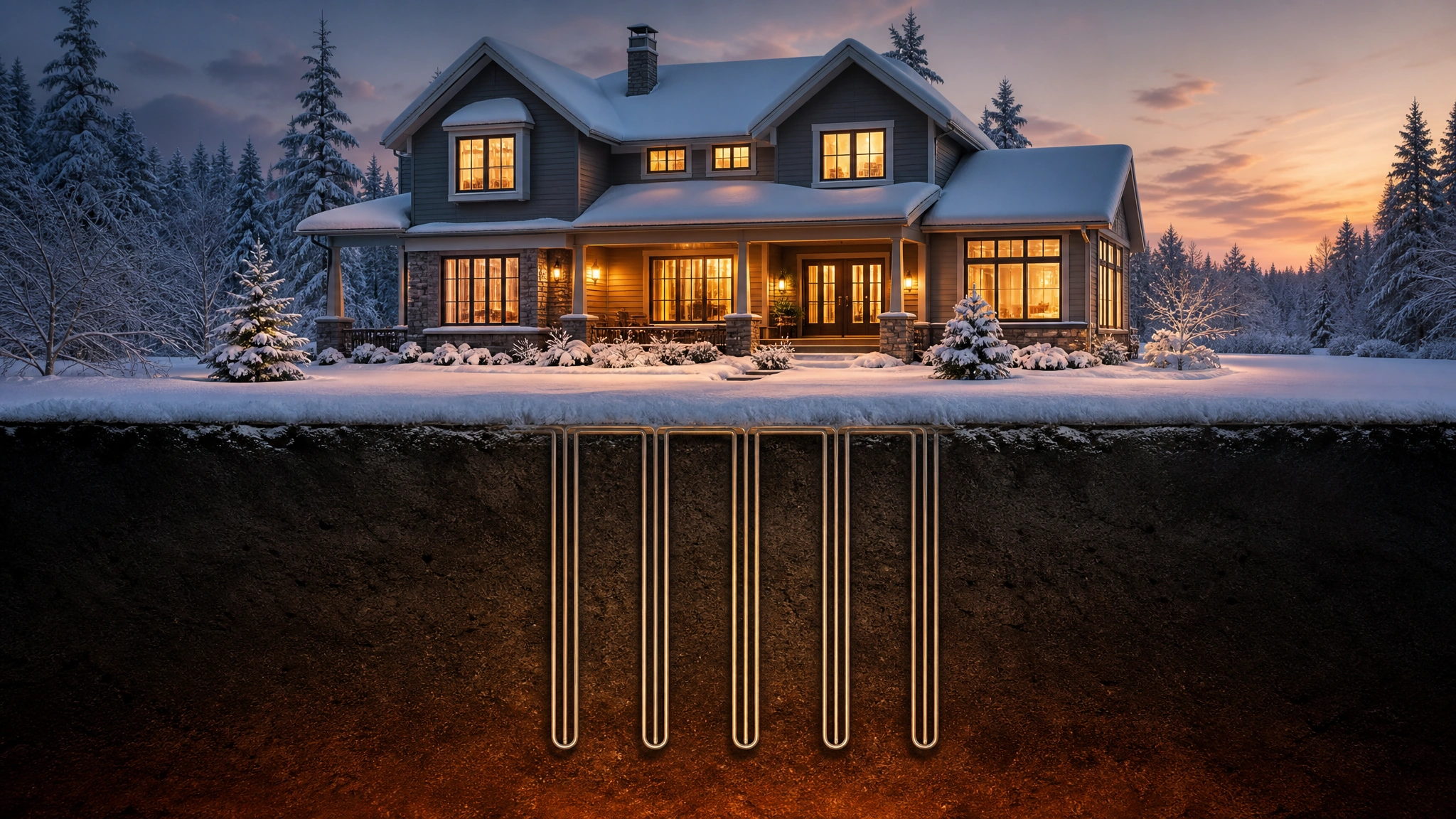
Geothermal Heating in Cold Climates: Myths vs. Reality
One of the most common questions we get from homeowners in northern states is: "Can geothermal really heat my home when it’s -20°F outside?" It’s totally understandable to be skeptical — if you’ve seen how air-source heat pumps struggle in extreme cold, it might feel like it’s too good to be true that a heat pump could be your main heating source in places like Maine, Minnesota, or Montana. But geothermal heat pumps work differently than air-source ones, and the science behind them shows that they can operate efficiently even in frigid temperatures.
In this article, we’re going to clear up the most common myths about geothermal systems in cold climates, dive into the science behind their cold-weather performance, share real-world data from northern installations, and argue that geothermal might actually offer its biggest financial advantages in the coldest parts of the country.
The Science: Why Ground Temperature Is Everything
To really grasp why geothermal energy works well in cold climates, it helps to know one key difference between geothermal systems and air-source heat pumps:
Air-source heat pumps pull heat from the outside air. When the temperature dips below 30-35°F, their efficiency takes a nosedive. And when it gets down to 10-15°F, most air-source heat pumps struggle to get enough heat from the air and have to rely on less efficient electric resistance backup heating. That’s why air-source heat pumps haven’t been the best option for cold climates—though it’s worth noting that modern cold-climate models have made great strides.
Geothermal heat pumps, on the other hand, draw heat from the ground, usually at depths of 6-400 feet. At these levels, ground temperatures stay surprisingly stable all year round, completely insulated from surface weather changes. This stability is what makes everything else possible.
Ground Temperatures Across the United States
Here’s a look at the average ground temperatures at typical geothermal loop depths (15-200 feet) for various cold-weather locations:
- Minneapolis, MN: 48-50°F (even with winter air temps often dropping to -10°F to -30°F)
- Anchorage, AK: 38-42°F
- Duluth, MN: 44-46°F
- Burlington, VT: 47-49°F
- Bangor, ME: 46-48°F
- Fargo, ND: 44-46°F
- Milwaukee, WI: 49-51°F
- Buffalo, NY: 48-50°F
Even in the coldest cities in the U.S., ground temperatures never go below 38°F at loop depth. So, on a day when it’s -20°F in Minneapolis, the geothermal system's pulling heat from 48°F ground — that’s a 68°F advantage compared to an air-source heat pump trying to grab heat from that harsh outdoor air.
Myth #1: "Geothermal Can't Keep Up When It's Really Cold"
The Myth
Lots of homeowners think geothermal systems can't keep their homes nice and cozy during those frigid cold snaps, leading to a need for costly backup electric heating that spikes their electricity bills.
The Reality
A properly designed and installed geothermal system can maintain your home's temperature even in the harshest cold weather your area faces — and it usually doesn't need backup heating at all. That’s because the ground temperature the system uses stays constant, no matter what’s happening outside. Whether it’s 20°F or -30°F, your geothermal system is drawing heat from the same 45-50°F ground.
The key here is "properly designed." The system needs to be sized to match your home's peak heating load — that’s the amount of heat your home requires on the coldest day for your area. A skilled geothermal contractor will use Manual J calculations that take your specific climate zone into account and size the system to meet that peak demand. The ground loop is also sized to ensure it can extract enough heat even in the toughest conditions.
The real-world evidence is impressive: tens of thousands of geothermal systems are running successfully in Minnesota, Wisconsin, Michigan, Maine, Vermont, and other chilly states. This technology has been reliably used in these regions for over 30 years.
Myth #2: "The Ground Freezes, So Geothermal Won't Work"
The Myth
People often wonder, if the ground freezes up top in winter, wouldn’t the pipes buried underground freeze too and cause the system to fail?
The Reality
Sure, the surface does freeze in colder climates, but the frost line (the deepest point the ground freezes) is actually pretty shallow — usually around 3-5 feet deep, even in the chilliest parts of the lower 48 states. Horizontal geothermal loops are set up at 4-6 feet deep, just at or below that frost line, while vertical loops go down 150-400 feet deep where frost isn't an issue at all.
Plus, the fluid that circulates in closed-loop systems is a water-antifreeze mixture (usually propylene glycol) that stays liquid even well below 0°F. So, the loop fluid doesn’t freeze and keeps absorbing heat from the surrounding ground, even in the dead of winter.
In vertical systems, most of the loop is way below any frost influence, working in ground that has a stable temperature throughout the year. For horizontal systems, even in frost zones, the ground temperature at 4-6 feet deep usually stays above 30°F during the coldest months — definitely warm enough for effective heat extraction.
Myth #3: "Geothermal Is Only Cost-Effective in Moderate Climates"
The Myth
People often think geothermal only works well in places with mild winters, suggesting that the longer heating season in colder areas makes it less cost-effective.
The Reality
This myth is actually flipped! Cold climates are where geothermal systems really shine in terms of financial benefits. Here’s why:
In colder areas, heating typically takes up the biggest chunk of a home's energy budget — usually about 50-70% of total annual energy costs. The more you spend on heating, the more you can save by switching to a more efficient system. For instance, a geothermal system running at 400% efficiency can save way more money annually when it replaces a propane furnace at 90% efficiency in a Minnesota home compared to if it were replacing natural gas heating in a milder Georgia home.
Cold Climate Savings Examples
- Minnesota homeowner replacing propane: $2,500-$3,500+ annual savings
- Maine homeowner replacing oil heat: $2,000-$3,000+ annual savings
- Wisconsin homeowner replacing electric baseboard: $3,000-$4,500+ annual savings
- Vermont homeowner replacing propane: $2,200-$3,200+ annual savings
With annual savings ranging from $2,500 to $4,500, plus the 30% federal tax credit and various state incentives, payback periods in cold climates can be as short as 3-5 years — which is quicker than in moderate climates where heating costs are lower.
Myth #4: "Geothermal Depletes the Ground's Heat Over Time"
The Myth
In colder areas where you take out more heat than you put back in (because heating needs are higher than cooling needs), doesn't that mean the ground will eventually "run out" of heat?
The Reality
This is a valid concern in engineering, and it's something that skilled geothermal designers keep in mind. In places that need more heating, the ground loop does pull more thermal energy during winter than it gives back in summer, which can lead to a slow drop in the ground temperature near the loop over time. But several factors keep this from being an issue:
- Natural thermal regeneration: The earth is always soaking up solar energy at the surface, and this heat moves down through the ground. The soil around the loops continually replenishes the heat in that area.
- Loop sizing accounts for imbalance: Professional design software takes into account the long-term effects of heating and cooling load imbalances and sizes the loop field accordingly. In heating-heavy climates, the loop field is made larger to handle the extra heat extraction.
- Real-world data confirms sustainability: Ground loops installed in chilly climates back in the 1980s and 1990s are still running strong today, with hardly any drop in ground temperature after over 30 years of use.
- Desuperheaters help rebalance: A desuperheater sends some heat to your hot water, cutting down on the total heat that's added to the ground in summer while still allowing for summer ground recharge.
Myth #5: "You Need Supplemental Electric Heat With Geothermal in Cold Climates"
The Myth
Some folks think geothermal can't heat a home in cold climates by itself and that it needs electric backup strips, which can negate its efficiency.
The Reality
In fact, a properly sized geothermal system can and should be the only heating source for your home, even in the chilliest conditions. Electric backup heat strips are generally included in most heat pump setups as a safety net for equipment failure—kind of like how many homes with gas furnaces have a backup heating option. But really, they should hardly ever kick in during typical use.
If your geothermal system is often relying on electric backup heat, it’s likely pointing to one of these issues:
- The system might be undersized for the home's actual heating needs
- The ground loop might be too short, causing the loop temperature to drop below the heat pump's operating range
- There could be insulation or air sealing issues that increase the heating load beyond what the system can handle
- The thermostat might be improperly programmed (aggressive temperature setbacks can trigger backup heat during recovery)
The fix for all these problems is proper design and installation—not just a bigger backup heater. A skilled cold-climate geothermal contractor will size your system to meet the 99% design temperature for your area (the temperature that's exceeded 99% of the year) without any need for backup heating.
Myth #6: "Air-Source Heat Pumps Are Now Good Enough for Cold Climates, Making Geothermal Unnecessary"
The Myth
These days, modern cold-climate air-source heat pumps—often known as "mini-splits" or "hyper-heat" systems—have come a long way and can supposedly handle cold climates just as effectively as geothermal systems, all while being more budget-friendly.
The Reality
It's true that cold-climate air-source heat pumps have made significant strides and can be a solid choice for many homeowners. Still, they’re not quite on par with geothermal when it comes to performance in cold climates:
- Efficiency comparison: The top-performing cold-climate air-source heat pumps can achieve a COP of 2.0-2.5 at an outdoor temperature of 5°F. In contrast, geothermal systems maintain a COP of 3.5-4.5, no matter the outdoor temperature. That’s 50-100% more efficient.
- Extreme cold performance: Many air-source heat pumps struggle with significant capacity loss when temperatures drop below -5°F to -15°F. Geothermal systems, on the other hand, don’t lose any capacity, no matter how cold it gets outside.
- Defrost cycles: Air-source heat pumps need to run defrost cycles regularly to clear ice from the outdoor coil, which can temporarily lower efficiency and comfort. Geothermal systems don’t have this issue at all.
- Lifespan: Outdoor units of air-source heat pumps typically last around 12-15 years in cold climates because of exposure to the elements. In comparison, geothermal indoor units can last 20-25 years, and the ground loops can last over 50 years.
That being said, for homeowners who might find the initial cost of geothermal out of reach or have properties where ground loops aren’t feasible, cold-climate air-source heat pumps are definitely a step up from traditional heating methods and offer a sensible alternative.
Real-World Cold Climate Performance Data
Now, let's dive into some real performance data from geothermal systems set up in cold climates:
Case Study: Minneapolis, MN (Climate Zone 6A)
Here’s a 2,800 sq ft home featuring a 4-ton WaterFurnace system with a vertical ground loop:
- Average winter COP: 3.8
- COP at -15°F outdoor temperature: 3.6 (just a slight drop)
- Backup heat usage: 0 hours over 3 years of operation
- Annual heating + cooling cost: $780
- Previous propane cost: $3,400/year
- Annual savings: $2,620
Case Study: Burlington, VT (Climate Zone 6A)
This one’s a 2,200 sq ft home equipped with a 3-ton ClimateMaster system and a horizontal ground loop:
- Average winter COP: 3.9
- Annual heating + cooling cost: $650
- Previous oil heating cost: $2,800/year
- Annual savings: $2,150
Case Study: Anchorage, AK
We have a 3,000 sq ft home using a 5-ton system and a vertical ground loop, which is one of the most challenging cold-climate setups in the U.S.:
- Average winter COP: 3.3 (a bit lower because of the cooler 40°F ground temperature)
- Annual heating cost: $1,100
- Previous heating cost (natural gas): $3,800/year
- Annual savings: $2,700
Tips for Cold-Climate Geothermal Success
If you're thinking about geothermal energy in a cold climate, here are some tips to help you get the best results:
- Choose an experienced cold-climate contractor: Pick a contractor who’s got plenty of geothermal experience in your specific climate zone. The design needs in cold climates are different from those in milder areas.
- Invest in your building envelope first: Making sure your insulation, air sealing, and windows are top-notch can lower your heating load. This means you can go for a smaller (and cheaper) geothermal system that runs more efficiently.
- Consider vertical loops: In colder areas, the deeper and more stable temperatures of vertical loops can offer significant efficiency benefits compared to horizontal loops.
- Avoid aggressive thermostat setbacks: Dropping the temperature by 10°F at night and trying to warm up quickly in the morning can activate backup heating. Geothermal systems perform best with consistent temperature settings or just slight adjustments (2-3°F).
- Ask about two-stage or variable-speed equipment: These systems adjust their output based on what you need, keeping things efficient in a variety of conditions while providing better comfort.
- Include a desuperheater: In heating-heavy climates, a desuperheater can give you affordable hot water and help keep your ground loop’s thermal balance in check.
Conclusion: Cold Climates Are Geothermal's Sweet Spot
The truth is quite the opposite of what some might think: cold climates are where geothermal really excels. With high heating demands leading to significant annual savings, stable underground temperatures that ensure reliable performance, and a big efficiency advantage over traditional heating systems (which boosts your financial return), cold-climate geothermal is one of the smartest energy choices a homeowner can make.
If you’re living in a cold climate and someone’s told you that geothermal isn't a good fit, it might be time to seek a second opinion from a contractor who knows the ins and outs of cold-climate installations. Check out our directory to find experienced geothermal professionals in your area who can give you a realistic look at what geothermal can do for your home—even when temperatures plummet well below zero.
Looking for a Geothermal Contractor?
Browse our directory of verified geothermal professionals.
Find Contractors