
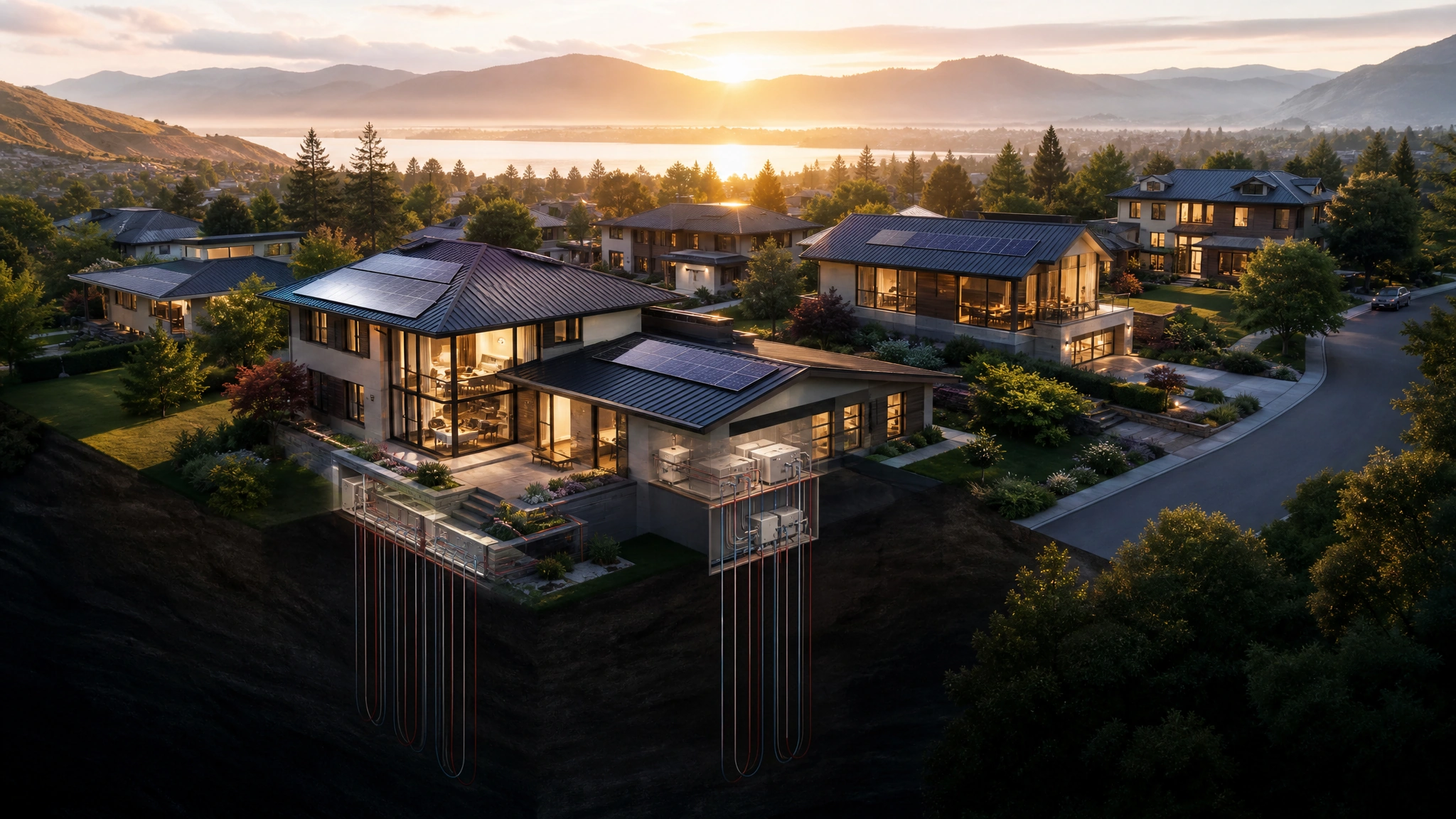
Best States for Geothermal Energy in 2026
Why State Selection Matters for Geothermal Energy in 2026
Geothermal heating and cooling systems take advantage of the earth's consistent underground temperatures to provide super-efficient climate control all year round. However, not every state is equally ideal for geothermal energy. Things like geology, climate, state incentives, utility rates, and the availability of contractors all play a role in how quickly homeowners or business owners can expect to see a return on their investment.
In 2026, the geothermal scene's looking better than ever. The federal 30% Investment Tax Credit (ITC) from the Inflation Reduction Act is still available, and many states have added their own rebates, property tax exemptions, and low-interest financing options. With natural gas and electricity prices on the rise, geothermal systems are offering payback periods as short as 5–8 years in the most favorable markets.
This guide ranks the top 10 best states for geothermal energy in 2026, assessing each one based on climate suitability, geological conditions, state incentives, average installation costs, and long-term savings potential. Whether you’re a homeowner planning a new build or a commercial developer looking into HVAC options, this ranking will help you see where geothermal offers the best value.
Ready to find a qualified installer? Check out our geothermal contractor directory to connect with certified professionals near you.
How We Ranked the States
We looked at five key criteria to rank each state:
- Climate Suitability (25%): States that deal with extreme heating and cooling really benefit from geothermal's efficiency all year round. We took a close look at heating degree days (HDD) and cooling degree days (CDD).
- Geological Conditions (20%): Factors like soil conductivity, bedrock depth, groundwater availability, and land area can all impact how we design loop fields and the costs of drilling.
- State Incentives & Rebates (25%): In addition to the federal 30% ITC, we examined state tax credits, utility rebates, property tax exemptions, and sales tax exemptions.
- Average Installation Costs (15%): Lower drilling and labor costs can really boost your return on investment. We compared average installation costs for residential setups across different states.
- Contractor Availability & Market Maturity (15%): In states with more certified installers, you’ll find better competition, pricing, and overall service quality.
If you want to dive deeper into available geothermal tax credits and incentives, check out our detailed guide for 2025–2026.
Top 10 Best States for Geothermal Energy in 2026
1. Minnesota
Minnesota's always at the top when it comes to geothermal energy, and 2026 is no different. With harsh winters averaging over 8,000 heating degree days and warm summers, the climate here really drives the need for efficient heating and cooling. Plus, the geology is just right—deep glacial soils with great thermal conductivity make it easy to install horizontal loops, and the plentiful groundwater supports open-loop systems in many areas.
The state offers a $0.10/kWh utility rebate through Xcel Energy and other utilities, along with a sales tax exemption on geothermal equipment. Installing geothermal systems won’t bump up your property taxes either. On average, residential installation costs range from $18,000 to $25,000 before incentives, and with the federal 30% ITC plus state rebates, you can often see net costs drop below $13,000. You can usually expect payback periods of about 6 to 8 years.
Minnesota's also got one of the most established geothermal contractor markets in the nation, with plenty of IGSHPA-certified installers competing for work across the Twin Cities metro area and beyond.
2. New York
New York has really put geothermal front and center in its climate strategy, and the incentives available to homeowners in 2026 are impressive. The state's NY-Sun and Clean Heat programs provide rebates of up to $7,000 for residential geothermal installations, and the 25% state tax credit (capped at $5,000) stacks right on top of the federal 30% ITC.
New York's climate really varies—while New York City enjoys mild winters, upstate areas experience about 6,000–7,000 HDD a year. The geology switches from deep sedimentary soils downstate to hard granite bedrock upstate, which can bump up drilling costs but also boosts the long-term performance of loops. On average, installation costs fall between $20,000 and $35,000, depending on where you are and what type of loop you choose.
The state’s strong push for carbon reduction and changes in the utility sector have fueled a booming contractor market, especially in regions like the Hudson Valley, Long Island, and Western New York.
3. Massachusetts
Massachusetts has one of the most generous geothermal incentive programs in the country. The Mass Save program offers rebates of up to $10,000 for ground source heat pump installations, and thanks to the state's Alternative Energy Portfolio Standard, geothermal system owners can also earn extra revenue through Renewable Thermal Credits (RTCs).
Massachusetts also boasts a solid network of certified geothermal contractors, especially in the Greater Boston area, Cape Cod, and the Pioneer Valley.
4. Wisconsin
Wisconsin's cold climate, great geology, and robust utility rebate programs really set it apart as a leading geothermal state. With an average of 7,000–8,000 heating degree days (HDD) each year, there's a significant demand for heating, and geothermal systems handle that demand with remarkable efficiency. Plus, Wisconsin's glacial soils—deep, moist, and thermally conductive—are pretty much perfect for horizontal loop installations, which helps keep costs down compared to states that need deep vertical drilling.
The statewide energy efficiency program, Focus on Energy, provides rebates ranging from $500 to $2,000 for residential geothermal installations. On top of that, several utility companies offer extra incentives. The state also doesn’t charge sales tax on geothermal equipment, which is a nice bonus. With average installation costs between $16,000 and $24,000 before incentives, and when you factor in both federal and state incentives, homeowners can expect payback periods of about 7 to 10 years.
5. Michigan
Michigan's long, chilly winters and warm summers create fantastic conditions for geothermal systems. The state has diverse geology—the Lower Peninsula has deep glacial soils that work well for horizontal loops, while the Upper Peninsula's rocky landscape is better suited for vertical systems. With an average of 6,500–7,500 HDD, geothermal systems in Michigan often achieve 400–500% efficiency (COP of 4–5) during the heating season.
Utilities like Consumers Energy and DTE Energy offer rebates from $300 to $1,500 for geothermal installations. While there's no specific geothermal tax credit in the state, the federal 30% ITC is fully applicable. Average installation costs of $17,000 to $26,000 before incentives are quite competitive. Plus, Michigan's extensive contractor network—especially around Grand Rapids, Lansing, and Detroit—helps ensure competitive pricing.
6. Pennsylvania
Pennsylvania's got a really diverse geology and climate, making it a great spot for geothermal energy. The state covers several climate zones, from the milder Philadelphia area to the chilly, mountainous north-central region. Average Heating Degree Days (HDD) range from about 4,500 in the southeast to over 7,000 in the north. When it comes to geology, Pennsylvania features deep sedimentary formations in the west and tougher metamorphic rock in the east, which impacts the design choices for geothermal loops.
The Pennsylvania ENERGY STAR Homes program along with various utility rebate programs offer some nice incentives, and the state even exempts geothermal equipment from sales tax. The federal 30% Investment Tax Credit (ITC) is the main financial motivator for installations. You can expect average installation costs to be between $18,000 and $30,000 before any incentives. Plus, there's a rising number of contractors in the market, especially around the Philadelphia suburbs, Pittsburgh area, and Lancaster County.
7. Colorado
Colorado's high altitude and semi-arid climate present some pretty unique geothermal opportunities. Denver typically sees around 6,000 HDD and 700 Cooling Degree Days (CDD)—a climate where geothermal heating efficiency really shines. The state's geology varies quite a bit: the Front Range has deep alluvial soils that work well for horizontal loops, while mountain communities need vertical drilling into granite and other hard rock formations.
Xcel Energy Colorado provides rebates of up to $1,500 for geothermal installations, and there’s a property tax exemption for renewable energy systems in the state. With more people becoming environmentally conscious and high energy costs (especially propane in rural areas), geothermal is becoming a more attractive option. Average installation costs typically range from $20,000 to $35,000 before incentives, reflecting the state's diverse geology.
8. Virginia
Virginia's really becoming a hotspot for geothermal energy, thanks to the Virginia Clean Economy Act and expanding utility incentive programs. With moderate winters—ranging from 4,000 to 5,500 heating degree days (HDD)—and hot, humid summers that see 1,500 to 2,000 cooling degree days (CDD), geothermal systems work great for both heating and cooling here. Plus, the state's geology has deep clay and sedimentary soils in the Piedmont and Coastal Plain regions, which are perfect for horizontal loop systems.
If you’re considering a geothermal installation, Dominion Energy Virginia offers rebates of up to $2,000. On top of that, there’s a sales tax exemption for geothermal equipment in the state. Average installation costs range from $16,000 to $28,000 before any incentives, which is pretty competitive. And don’t forget, Northern Virginia’s close to the DC metro area, making for a thriving contractor market with plenty of competition.
9. Oregon
Oregon's got a mild, wet climate and forward-thinking energy policies that make it an attractive geothermal market. The western valleys usually see about 4,500 to 5,500 HDD and have low cooling needs, while eastern Oregon tends to be colder and drier. The state's geology is quite varied: the Willamette Valley has deep alluvial soils, while the Cascades and eastern regions feature volcanic rock formations that can make drilling a bit tricky.
For those looking into geothermal installations, Oregon offers a Residential Energy Tax Credit (RETC) of up to $1,500, along with cash incentives of $1,000–$3,000 from the Energy Trust of Oregon. Typical installation costs are around $18,000 to $30,000 before incentives. Plus, Portland's strong environmental culture has helped foster a growing market for geothermal contractors.
10. Illinois
Illinois wraps up our top 10 thanks to its mix of chilly winters, sizzling summers, and a growing incentive scene. Chicago sees about 6,500 HDD and 800 CDD—a climate where geothermal systems work efficiently all year round, leading to significant savings. Plus, Illinois has deep glacial soils throughout most of the state, which makes horizontal loop installations pretty affordable.
The Illinois Shines program along with ComEd/Ameren utility rebates offer some nice incentives, and the state even has a sales tax exemption for geothermal equipment. With average installation costs ranging from $16,000 to $24,000 before incentives, that’s some of the lowest pricing in the Midwest. Illinois also boasts a large, competitive contractor market, especially in the Chicago metro area.
State Comparison Table: Top 10 States for Geothermal Energy 2026
| State | Avg HDD | Avg CDD | State Incentives | Avg Install Cost (Before ITC) | Est. Payback Period |
|---|---|---|---|---|---|
| Minnesota | 8,000+ | 600 | Utility rebates + sales tax exemption | $18,000–$25,000 | 6–8 years |
| New York | 5,000–7,000 | 500–900 | 25% state tax credit + $7,000 rebate | $20,000–$35,000 | 7–10 years |
| Massachusetts | 5,500–6,500 | 500–700 | $10,000 rebate + RTCs | $22,000–$38,000 | 6–9 years |
| Wisconsin | 7,000–8,000 | 500 | $500–$2,000 rebate + sales tax exemption | $16,000–$24,000 | 7–10 years |
| Michigan | 6,500–7,500 | 600 | $300–$1,500 utility rebates | $17,000–$26,000 | 8–11 years |
| Pennsylvania | 4,500–7,000 | 600–900 | Sales tax exemption | $18,000–$30,000 | 9–12 years |
| Colorado | 6,000 | 700 | $1,500 rebate + property tax exemption | $20,000–$35,000 | 9–13 years |
| Virginia | 4,000–5,500 | 1,500–2,000 | $2,000 rebate + sales tax exemption | $16,000–$28,000 | 8–12 years |
| Oregon | 4,500–5,500 | 300 | $1,500 tax credit + $1,000–$3,000 rebate | $18,000–$30,000 | 9–13 years |
| Illinois | 6,500 | 800 | Sales tax exemption + utility rebates | $16,000–$24,000 | 9–12 years |
Geological Conditions: What Makes a State Geothermal-Friendly?
Geology plays a crucial role in how well geothermal systems work and their overall cost, yet it often flies under the radar. The earth's thermal properties can vary quite a bit by region, which impacts how effectively heat moves between the ground and the loop fluid.
Soil Thermal Conductivity
Moist, dense soils like clay and silt have high thermal conductivity (1.5–2.5 W/m·K), making heat exchange efficient with shorter loop lengths. On the other hand, sandy or dry soils have lower conductivity (0.5–1.5 W/m·K), which means longer loops are necessary. States like Minnesota, Wisconsin, and Illinois really benefit from their deep glacial soils that have fantastic thermal properties.
Bedrock Depth and Type
In states where bedrock is shallow, like New England, the Appalachians, and the Rocky Mountains, vertical drilling into rock is often needed. While it might cost more upfront ($15–$25/foot compared to $5–$10/foot for trenching), vertical loops in rock can be really efficient because of the stable temperatures and good thermal mass that rock provides. In contrast, states with deep sedimentary soils, such as those in the Midwest and Mid-Atlantic, often find that horizontal loops are a more affordable option.
Groundwater Availability
States that have plenty of accessible groundwater—like Minnesota, Wisconsin, Michigan, and parts of the Mid-Atlantic—can take advantage of open-loop systems that pump groundwater directly through the heat exchanger. These systems are usually 20–30% more efficient than closed-loop systems and are cheaper to install, but they do require a reliable water supply and proper discharge management.
The Federal 30% Investment Tax Credit: A Game-Changer for All States
No matter where you live, the federal 30% Investment Tax Credit (ITC) from the Inflation Reduction Act is available for all residential geothermal heat pump installations. This credit can help lower your federal income tax bill by 30% of the total installation cost, which includes equipment, labor, and the loop field work.
If you go for a $25,000 installation, you can save $7,500 just from the federal ITC. When you combine that with state incentives, you might see the effective cost drop by 40–60% in some states. Want to know more about maximizing your geothermal tax credits and incentives? Check it out!
For a thorough look at what geothermal systems cost before and after incentives, take a peek at our comprehensive geothermal cost guide.
States to Watch: Emerging Geothermal Markets
There are several states outside our top 10 that are really stepping up their geothermal incentive programs and are worth keeping an eye on:
- Maine: The Efficiency Maine program has significantly boosted geothermal rebates, and with the state's chilly weather, the demand is strong. You can get rebates of up to $8,000 for heat pump systems.
- Maryland: The EmPOWER Maryland program, along with BGE/Pepco utility rebates, is expanding. Thanks to its moderate climate and closeness to the DC market, there's a growing number of contractors in the area.
- Connecticut: The Connecticut Green Bank provides low-interest financing for geothermal, and utility rebates are on the rise. With high electricity costs in the state, geothermal's efficiency really stands out.
- Vermont: Efficiency Vermont offers solid rebates, and the cold climate leads to a high demand for heating. Although Vermont's small size limits the number of contractors, the market is definitely growing.
- Iowa: With its favorable geology (deep glacial soils) and expanding utility rebate programs, Iowa is becoming an increasingly appealing geothermal market.
How to Choose the Right Geothermal System for Your State
Once you’ve figured out your state’s geothermal potential, the next step is picking the right type of system. Whether you go for horizontal loops, vertical loops, pond/lake loops, or open-loop systems really depends on your specific site conditions, how much land you have, and your budget.
Here are some important points to chat about with your contractor:
- Available land area: Horizontal loops need about 1,500–3,000 sq ft of trenching area for each ton of capacity. Vertical loops take up less space but do need access for drilling equipment.
- Soil and rock conditions: A thermal conductivity test (TRT) can give you a precise measure of your site’s heat exchange capacity, helping to optimize loop design and keep costs down.
- Groundwater availability: If you’ve got a reliable well with good flow, an open-loop system could be the most budget-friendly choice.
- Local contractor expertise: The best system design isn’t worth much if it’s not installed properly. Make sure to work with an experienced, certified contractor.
For tips on finding a qualified installer, check out our guide on choosing the right geothermal contractor. You can also look through certified contractors in our geothermal contractor directory or explore top system manufacturers at geothermal manufacturers.
Long-Term Savings: What to Expect by State
When it comes to the long-term financial benefits of geothermal, it really depends on where you live. Factors like utility rates, climate, and how well the system performs all play a role. Here’s a quick look at what homeowners can generally expect:
| State | Avg Electricity Rate (¢/kWh) | Annual Heating/Cooling Savings | 25-Year Savings (vs. Gas) |
|---|---|---|---|
| Minnesota | 13¢ | $1,800–$2,400 | $35,000–$50,000 |
| New York | 22¢ | $1,500–$2,200 | $30,000–$45,000 |
| Massachusetts | 24¢ | $1,600–$2,400 | $32,000–$48,000 |
| Wisconsin | 14¢ | $1,700–$2,300 | $33,000–$47,000 |
| Michigan | 16¢ | $1,600–$2,200 | $30,000–$44,000 |
| Virginia | 12¢ | $1,400–$2,000 | $28,000–$40,000 |
| Illinois | 13¢ | $1,500–$2,100 | $29,000–$42,000 |
Frequently Asked Questions
Which state has the best geothermal incentives in 2026?
In 2026, Massachusetts and New York are leading the way with the most generous incentive packages. Homeowners in Massachusetts can grab up to $10,000 in Mass Save rebates, plus the federal 30% ITC and Renewable Thermal Credits. Over in New York, there's a 25% state tax credit (up to $5,000) along with up to $7,000 in utility rebates, all stacking on top of the federal credit.
Do I need to live in a warm state for geothermal to work?
Nope! In fact, colder states often have an edge with geothermal systems because the savings on heating can be even bigger. These systems work by exchanging heat with the ground, which stays at a comfy 45–75°F year-round, no matter what the weather's like outside. States like Minnesota and Wisconsin are actually some of the best markets for geothermal, thanks to their harsh winters.
What is the minimum lot size needed for geothermal?
If you're looking at horizontal loop systems, you'll generally need at least 1,500–3,000 square feet of open land for each ton of system capacity (most homes need about 3–5 tons). On the other hand, vertical loop systems only require a small area—just enough for a drilling rig—so they're perfect for smaller lots. And if you're considering pond or lake loop systems, make sure you have access to a suitable body of water.
How do I find a certified geothermal contractor in my state?
To find a certified geothermal contractor, look for those certified by the International Ground Source Heat Pump Association (IGSHPA) or with certifications from brands like Carrier, WaterFurnace, or Bosch. You can check out our geothermal contractor directory for certified professionals in all 50 states.
Conclusion: The Best States for Geothermal in 2026
Geothermal energy is shaping up to be one of the most efficient and cost-effective heating and cooling options in 2026, and picking the right state can really boost your return on investment. Minnesota, New York, and Massachusetts are at the top of our list, thanks to their chilly climates, favorable geology, and generous incentive programs. But every state in our top 10 has solid economic benefits for homeowners and businesses ready to invest upfront.
The federal 30% Investment Tax Credit makes geothermal appealing in every state, and with rising energy costs, payback periods are getting shorter everywhere. Whether you’re in the Midwest, Northeast, or Mid-Atlantic, 2026 is a great year to look into geothermal energy for your home or business.
Start by connecting with a certified contractor in our geothermal contractor directory, check out top system options at geothermal manufacturers, and take a look at our detailed guides on geothermal installation costs and choosing the right contractor to help you make the best decision for your property.
Looking for a Geothermal Contractor?
Browse our directory of verified geothermal professionals.
Find Contractors